

Data Centres · Q3 2026 Sector Note · July 1, 2026
Sovereign Compute: Canada's AI Data Centre Build-Out and Where the Opportunity Sits
Ottawa is backing sovereign AI data centres and the telecom operators are building. As in 2023 and 2024, the binding constraint is power.
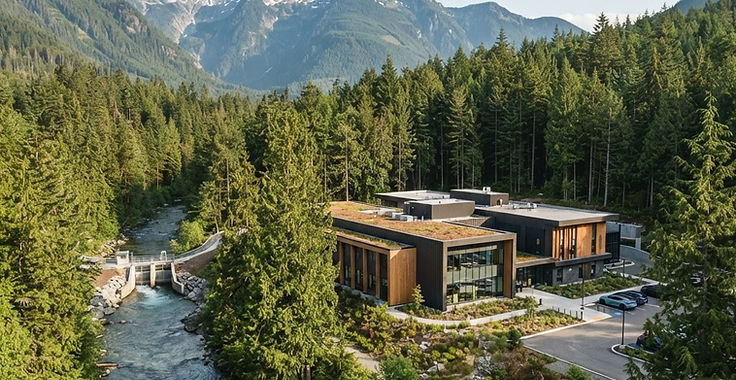
"Sovereign compute" has moved from a policy slogan to construction plans. In the past six months, Ottawa has launched a program to back large-scale AI data centres on Canadian soil, Canada's largest telecom operators have announced multi-site AI facilities, and provinces have started rationing grid access for large loads. Canada now has a real AI infrastructure market. The binding constraint, as we predicted in 2023 and 2024, is power.
The policy push
Budget 2025 committed about C$925 million over five years to large-scale sovereign public AI infrastructure and set out a plan to identify a small number of large commercial sovereign AI data centre projects. A federal call for proposals under the Enabling Large-Scale Sovereign AI Data Centres initiative opened in January 2026. Projects receiving federal support will carry sovereignty requirements on ownership, operation and data governance, though operators will not be limited to Canadian customers. Ottawa has said it is open to different funding models, including financing support for developers.
The projects
- British Columbia cluster. On 11 May, the federal government and TELUS announced a three-site AI data centre cluster in B.C.: an expansion in Kamloops and a new Mount Pleasant facility in Vancouver, both due to open later this year, and a downtown Vancouver facility for 2029. TELUS says its first sovereign AI facility in Rimouski, Quebec is sold out.
- Bell AI Fabric. Bell is building a network of AI data centres in B.C., starting with smaller inference-focused sites in Kamloops and a larger facility with Thompson Rivers University targeted for the end of 2026.
- Alberta. The province's grid operator received more than 16,000 MW of large-load connection requests — more than Alberta's entire peak demand of roughly 12,000 MW — and set a one-time interim limit of 1,200 MW through 2028. That capacity is now fully allocated to two projects. Alberta will also apply a 2% levy on computer hardware at large grid-connected data centres from 31 December 2026, creditable against provincial corporate tax.
Why it matters now
The 2026 energy shock has strengthened Canada's position. With conflict in the Middle East disrupting Gulf energy exports and lifting global energy prices, investors are placing a higher value on stable jurisdictions with domestic power, cold climates and low political risk. Canada offers all three. It also offers something many hubs cannot: the option to build generation and data centres together.
But the grid is already the constraint. Hydro-rich provinces are protecting capacity for their own industrial and electrification needs, and Alberta's interim limit shows how quickly available capacity fills. New AI campuses will increasingly need new, dedicated generation — natural gas with a path to carbon capture, new hydro, nuclear or large renewable-plus-storage builds.
Where the opportunity sits
- 1Power-first developments. Projects that pair new generation with the data centre, and can energize without waiting for grid reinforcement, will move first.
- 2Inference at the edge of cities. Mid-sized facilities close to users — like those being built in B.C. — serve real-time AI workloads and sovereign government demand.
- 3Brownfield sites. Retired industrial sites, former thermal plants and areas with existing transmission and water rights have a time-to-power advantage.
- 4Supply chain. Transformers, switchgear, cooling systems, fibre and skilled trades are scarce. Suppliers and contractors in these areas will see strong demand.
- 5Capital. Federal financing tools, infrastructure funds, pension funds and strategic partners are all looking for credible Canadian projects.
What this means for clients
- Lead with power. A credible plan for megawatts — contracted, dated and permitted — is the first thing investors and governments will ask about.
- Design for sovereignty. If federal support is part of the plan, ownership, operations and data governance must meet sovereignty requirements from day one.
- Engage Indigenous and municipal partners early. Land, water and community support decide timelines as much as engineering does.
- Model provincial rules carefully. Grid allocation rules, levies and power pricing differ sharply between provinces and can change quickly.
Aquamerge advises developers, landowners and investors on data centre and energy projects, from power strategy and site evaluation to capital raising and project management.
Sources: Government of Canada, "Government of Canada and TELUS advance work to build sovereign AI infrastructure" (11 May 2026); CBC News and BNN Bloomberg coverage of the TELUS B.C. cluster (May 2026); Bell Canada, Bell AI Fabric announcement; AESO, Large Load Integration fact sheet (Jun 2025); BLG, "Data Centre Regulation in Alberta" (Jul 2026).
Published by AQUAMERGE INC. for general information only. Figures, counterparties and commercial terms are disclosed only under NDA.