

Fertilizers & Agriculture · Q4 2026 Sector Note · October 1, 2026
Soil to Shelf: Biologicals, Precision Inputs and the Next Phase of Farm Productivity
The Strait of Hormuz closure turned fertilizer into a front-page story again. The answer emerging in 2026 is a system: biologicals, precision application and diversified supply.

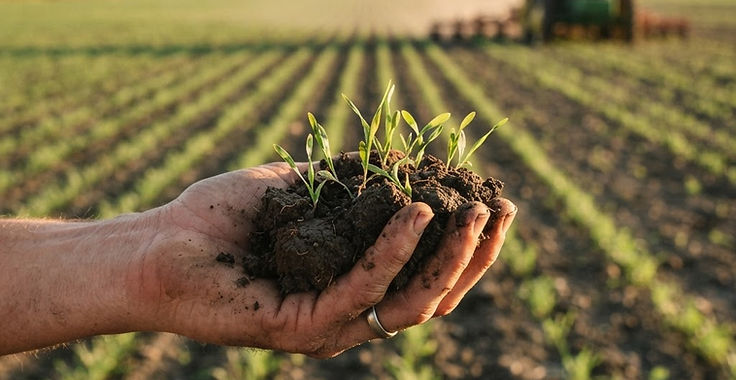
For the second time in four years, a war has turned fertilizer into a front-page story. The effective closure of the Strait of Hormuz since late February 2026 has cut off a large share of the world's traded urea, ammonia and sulphur. Farmers everywhere are asking the same question: how do we grow the same crop with less exposure to imported, volatile inputs? The answer emerging in 2026 is not a single product but a system — biological inputs, precision application and diversified supply working together.
The 2026 input shock
- Nitrogen. Urea prices roughly doubled within weeks of the disruption. World Bank data show urea averaging about US$694 per tonne in the second quarter before easing to around US$400 per tonne by September, as buyers cut purchases and alternative supply arrived.
- Phosphate and sulphur. Phosphate has stayed expensive because its key inputs — sulphur and ammonia — move heavily through the Gulf. Qatar suspended urea, ammonia and sulphur production after damage to facilities, and sulphur prices have climbed above US$1,000 per tonne. Phosphate fertilizer prices are up roughly 25–30%.
- Affordability. Brazilian farmers saw local fertilizer prices jump more than 35% in the first two weeks of the conflict. In the U.S., analysts project fall 2026 nitrogen and phosphate purchases well above pre-crisis prices under every scenario, while crop prices have not kept pace.
- Potash held up better. With supply concentrated in Canada and other non-Gulf origins, potash has eased this year — a reminder of the value of origin diversity we have highlighted since 2023.
Why biologicals are moving to the centre
Biological inputs — microbial inoculants, nitrogen-fixing and phosphate-solubilizing microbes, biostimulants and soil amendments — have been growing for a decade. In 2026, they have become a cost-management tool. Industry estimates put the global agricultural biologicals market in the range of US$12–18 billion and growing at around 10–12% a year, with North America the largest market and Latin America the fastest-growing. In a recent U.S. survey, 56% of agricultural retailers reported year-over-year growth in biologicals sales.
The technology has matured. Nitrogen-fixing products now extend beyond legumes to corn, wheat and other row crops, and phosphate-solubilizing microbes help plants access phosphorus already bound in the soil. Biostimulants help crops tolerate drought and heat stress — increasingly relevant as weather becomes less predictable. International food security researchers have called for greater investment in biofertilizers and fertilizer-saving practices as a direct response to this year's crisis.
Precision closes the loop
Biologicals work best alongside precision agriculture. Soil testing, variable-rate application, in-season sensing and data-driven nutrient planning let growers put each tonne of fertilizer where it earns the most. The goal is not to replace mineral fertilizer — potash, phosphate and nitrogen remain essential — but to raise nutrient-use efficiency so that every input dollar works harder.
What this means for clients
- Treat inputs as a portfolio. Combine mineral fertilizers from diversified origins with biological products and precision practices, rather than relying on a single imported source.
- Trial on your own acres. Biological performance depends on soil, crop and climate. Structured, side-by-side trials build the evidence for wider adoption.
- Check registration and quality. Biological products are regulated differently across markets, and quality varies widely. Insist on registered products, documented strains and viability guarantees.
- Secure origin-resilient supply. For mineral fertilizers and sulphur, supply from outside the Gulf — including Canadian potash and sulphur — reduces exposure to the current disruption.
- Plan 2027 budgets for higher costs. Analysts expect elevated nitrogen and phosphate costs into 2027 even if shipping normalizes. Efficiency gains made now will pay off beyond this crisis.
Aquamerge supplies agricultural inputs — including potash, sulphur and soil and crop nutrition products — to distributors, growers and agricultural projects, with sourcing, documentation and logistics managed through a single process.
Sources: IFPRI, "Iran war: From fertilizer to food crisis?" (2026); AMIS Market Monitor, "Hormuz shock: global and regional impacts on fertilizer markets" (2026); World Bank, "Fertilizer prices surge as Strait of Hormuz disruptions tighten supplies" (2026) and Pink Sheet data (Oct 2026); farmdoc daily, University of Illinois, Hormuz scenario analysis (Apr 2026); UkrAgroConsult, sulphur and phosphate market coverage (Oct 2026); CropLife, Biologicals 2026 report.
Published by AQUAMERGE INC. for general information only. Figures, counterparties and commercial terms are disclosed only under NDA.