

Commodities & Logistics · Q1 2024 Sector Note · January 1, 2024
Red Sea Diversions: What Longer Shipping Routes Mean for Bulk Commodity Buyers
Two maritime shortcuts are constrained at once: Red Sea diversions and Panama Canal drought. For bulk buyers, delivered cost now depends as much on routing as on product price.
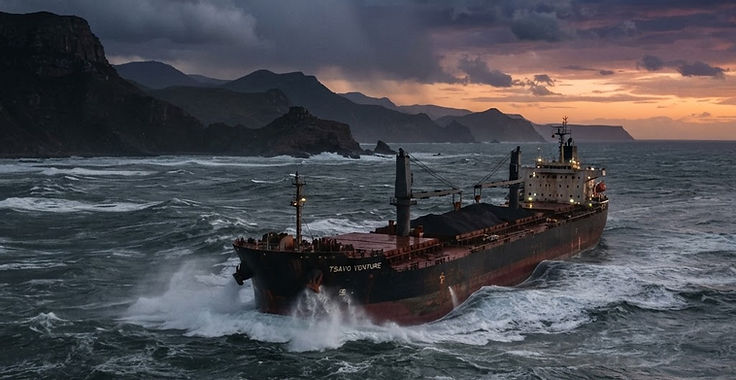
For the first time in modern shipping, two of the world's great maritime shortcuts are constrained at once. Attacks on merchant vessels in the Red Sea have pushed a large share of Asia–Europe traffic around the Cape of Good Hope, while drought has cut capacity through the Panama Canal. For commodity buyers, delivered cost and delivery reliability now depend as much on routing as on product price.
The Red Sea
Since November 2023, attacks on commercial shipping near the Bab el-Mandeb Strait have forced the major container lines to suspend Red Sea transits. U.S. and U.K. strikes on Houthi positions began on 11–12 January, but shipowners are treating the threat as long-lasting. Industry data show Suez Canal transits in the first two weeks of 2024 down about 64% on a year earlier, with Cape of Good Hope passages up about 168%.
The Cape route adds roughly 3,600 nautical miles between Singapore and Rotterdam, or around 10 to 20 extra days at sea depending on speed. Dry bulk has so far diverted less than container shipping, with bulk transits of the Bab el-Mandeb down around 12% in early January. We expect that share to grow as insurers raise war-risk premiums and more charterers rule the route out.
The Panama Canal
At the same time, 2023 was one of the driest years on record in Panama, and October 2023 was the driest month in the canal watershed's history. Daily transits, normally around 36, were cut to 22 in December and are rising only to 24 from 16 January. The maximum draft is 44 feet, down from 50 feet, forcing many larger vessels to load light. Dry bulk cargoes — grain, fertilizers, minerals and ores — are among the most affected.
Why it matters for bulk commodities
- Freight becomes a bigger share of delivered cost. For low-value bulk commodities such as sulphur, fertilizers and grains, a longer voyage can move the delivered price more than a change in the product's FOB price.
- Tonnage gets absorbed. Longer voyages tie up ships for more days, tightening vessel availability across all routes, not just the affected ones.
- Schedules lose reliability. Laycan windows widen, demurrage risk rises and just-in-time supply chains for fertilizer seasons or plant feedstock come under pressure.
- New costs stack up. War-risk insurance, higher bunker consumption and, from 1 January 2024, the EU Emissions Trading System for shipping all add to voyage cost.
Canada's advantage
Canadian exports to Asia ship across the Pacific from West Coast terminals and do not touch either chokepoint. For buyers in China, India, Southeast Asia and Oceania, that makes Canadian-origin potash, sulphur and agricultural products structurally less exposed to the current disruptions than cargoes routed through Suez or Panama. Atlantic buyers in Europe, North Africa and Latin America can source from Eastern Canada, which also avoids both canals.
What this means for clients
- Negotiate on delivered cost. Compare offers on a CFR basis, not FOB. A cheaper FOB price can be the more expensive cargo once freight and insurance are included.
- Build buffer stock ahead of seasons. Fertilizer buyers facing spring application windows should add two to four weeks of lead time this year.
- Review contract terms. Check force majeure, deviation and war-risk clauses. Agree in writing who bears the cost of rerouting.
- Favour route-resilient origins. Where quality and price are comparable, supply that avoids both chokepoints reduces risk.
Aquamerge structures commodity transactions with sourcing, shipping coordination and documentation managed together, so clients can compare true landed cost and secure supply that arrives on schedule.
Sources: Drewry via gCaptain, "Suez Canal diversions" (Jan 2024); Lloyd's List, "Red Sea shipping is now divided down lines of risk appetite" (Jan 2024); Panama Canal Authority notices (Dec 2023–Jan 2024); Seatrade Maritime, "Panama Canal increases daily transits to 24 from 16 January."
Published by AQUAMERGE INC. for general information only. Figures, counterparties and commercial terms are disclosed only under NDA.